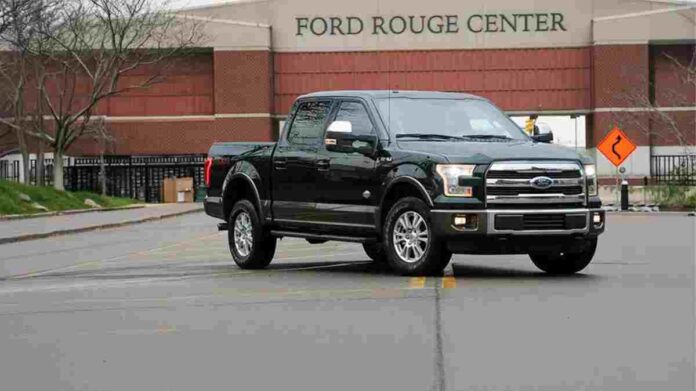
Ford Motor Company is recalling nearly 1.4 million F-150 pickup trucks in the United States after federal regulators identified a gearshift problem that could cause sudden and unintended downshifts. The issue affects certain 2015 to 2017 model-year trucks equipped with the six-speed automatic 6R80 transmission, specifically those built between March 12, 2014, and August 18, 2017. Drivers may experience a temporary loss of control when the vehicle abruptly drops into second gear without warning, potentially leading to rear-wheel slippage and an increased crash risk during highway driving or everyday maneuvers.
The root cause stems from electrical connections in the transmission range sensor that degrade over time because of constant exposure to heat and vibration. These worn connections can interrupt signals sent to the powertrain control module, triggering the dangerous downshift. While the problem does not affect every truck in the affected range, the scale of the recall underscores how even proven components in high-volume vehicles can develop issues after years of real-world use. Ford has confirmed awareness of one accident and two injuries possibly connected to the malfunction, though the company stresses that the vast majority of owners have not reported problems.
This recall follows a year-long investigation by the National Highway Traffic Safety Administration that began in March 2025 after multiple consumer complaints surfaced about unexpected shifts. Regulators determined the intermittent signal loss posed a genuine safety hazard, prompting Ford to act quickly. The automaker will fix the issue at no cost to owners by installing a software update to the powertrain control module. The update recalibrates the system to prevent false signals and should take only a short time at any authorized Ford dealership. In some cases, the fix may even be delivered over the air, minimizing inconvenience for busy truck owners who depend on their vehicles for work, towing, or daily commutes.
Owners of 2015-2017 F-150s should check their vehicle identification number on the NHTSA website or Ford’s official recall page as soon as possible. Ford plans to mail official notification letters in the coming weeks with clear instructions on scheduling the free repair. Until the software update is applied, drivers are advised to remain alert for any unusual shifting behavior, especially at higher speeds, and to pull over safely if the truck feels unresponsive or jerks unexpectedly. While the recall does not require immediate vehicle removal from service, early attention can prevent potential incidents and give peace of mind to those who rely on their F-150 as a trusted workhorse.
The F-150 has long been America’s best-selling pickup, prized for its durability, capability, and innovation. Yet this latest action highlights the challenges automakers face in maintaining electronic systems across millions of vehicles that see everything from dusty job sites to harsh winter roads. Industry observers note that recalls of this size are not uncommon in the truck segment, where heavy use accelerates wear on components. Ford’s proactive response, including a straightforward software remedy, reflects the company’s ongoing commitment to safety and customer satisfaction. Past large-scale recalls have shown that transparent communication and efficient service help preserve owner loyalty even when issues arise years after purchase.
For many drivers, the F-150 represents more than transportation—it is an essential tool for livelihoods and family adventures. This recall, while disruptive for some, ultimately reinforces the importance of staying current with manufacturer updates. Truck enthusiasts and fleet operators alike are encouraged to treat recall notices with the same urgency as routine oil changes or tire rotations. As vehicles grow more reliant on sophisticated electronics, such preventive measures become critical to keeping roads safer for everyone.
Ford continues to monitor the situation closely and has not reported any expansion of the recall at this time. Affected owners who have questions can contact their local dealership or visit Ford’s customer service portal for personalized guidance. In the broader automotive landscape, this development serves as a timely reminder that even iconic models require vigilance to maintain their legendary reputation for reliability.