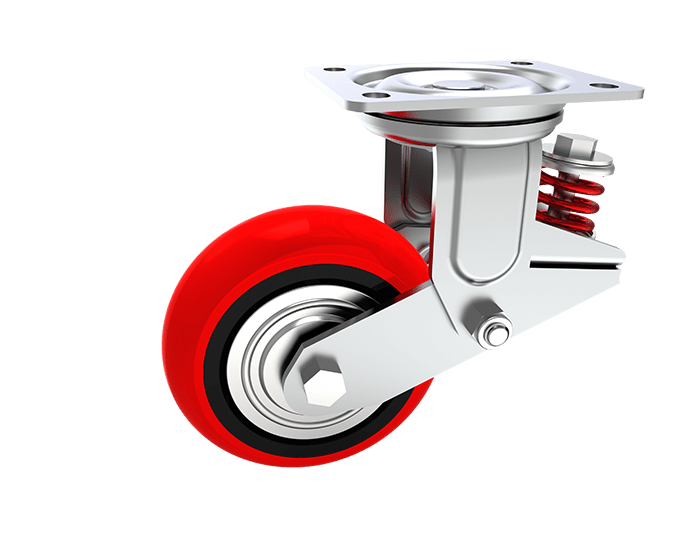
In industrial settings, the consequence from caster failure can be enormous. Worker injury and the related insurance claims to the production slowdowns that affect profit margins are all possible outcomes that no company wants to make do with.
No wonder it is essential that you take the entire environment into consideration when designing the specifications for your industrial caster applications. While casters come with built-in safety factors designed specifically for most heavy-duty applications, failures can still occur if not treated properly.
For this purpose, we take you through some of the common reasons for caster failures and how you can keep them at bay.
Extreme Temperatures
It is worth mentioning that caster wheels can fail in elevated temperatures exceeding 100°F. At this temperature, wheel material becomes a concern considering softer materials like rubber and polymers tend to flat spot or even melt in some instances. Temperature increases also affect your choice of grease for castor wheels.
If you settle for the wrong grease choice, then it will start to break down and liquify. What this simply means is that it won’t lubricate the heavy-duty casters perfectly, increasing the chance of bearing failure. It is important to consult with a top caster wheel manufacturer to properly specific the right one for your application.
Overloading and Uneven Loading
An important point worth remembering is that all castors have a capacity rating. When the load exceeds the said rating, the castors will eventually fail. To prevent this from happening, you should get heavy duty castors with a higher capacity than your calculation to allow for shock loads, rocking or poor floors.
Caster failure from uneven loading occurs when one caster is made to carry a significantly higher proportion of the load. This eventually leads to premature wear of the caster or complete failure with a magnified impact load.
Environmental
Aside from extreme temperatures, there are other crucial factors that can impact the performance of heavy-duty caster wheels. Corrosives, wet environments, and debris all take their toll on some castor materials. Additionally, rough terrain can impart large impact loads and leave indentations on the caster called brinelling.
When taking heavy duty trolley wheels over grueling environments or rough terrain, it is essential to go for casters offering benefits like shock absorption durability, and corrosion. Comfort Castors offers a full line of caster to meet these challenges.
Rounding Up
The above are merely some of the most common reasons behind industrial caster failure. Fret not, though, since you can easily avoid these mistakes. The secret lies in fully understanding the type of environment your casters will operate in. After all, this information helps you in correctly choosing the size and type of caster needed to make your application successful.
Remember, you need to count on a top caster wheel manufacturer in India that guarantees quality on all their offerings. And no better place to search for trolley wheels than at Comfort Castors. Designed for superior performance, durability, and safety, our products meet international standards, ensuring reliable & efficient mobility solutions for various industries and applications.