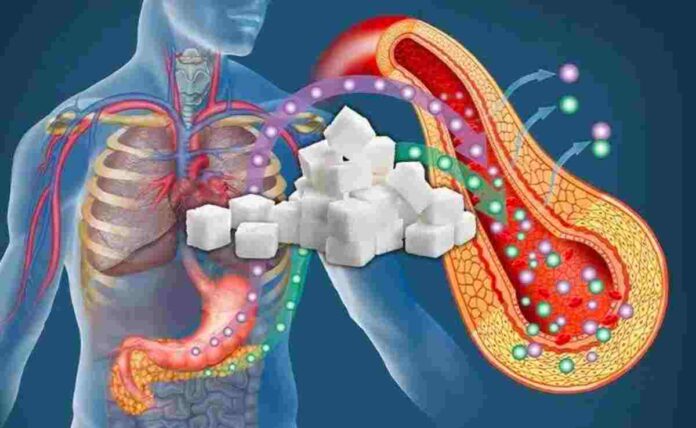
While antibiotics are often necessary to combat bacterial infections, they can also cause damage to the population of small organisms in our guts. Now, research indicates that the diet we follow while we are taking those medicines can be a factor in how much that damage worsens, with sugar-based foods coming out as a suspect.
The research, which was published in Nature, looked at 9,419 meals eaten by 173 patients undergoing hematopoietic cell transplantation. The researchers investigated the patients’ detailed dietary logs and more than 1,000 stool samples to explore how food consumption correlated to shifts in the microbiome when talking about treatment. In patients who received broad-spectrum antibiotics, the more that they ate sweets and sugars, the less diverse their microbiomes tended to be, and the more they was likely to have Enterococcus expand.
There are a diverse array of bacteria present in your gut microbiome that communicate with each other and also with your body. A highly diverse lifestyle in microorganisms tends to prevent pathogenic microorganisms from taking over negatively. Sadly, antibiotics don’t discriminate between good and infected states of these microorganisms in the harmless and pathogenic situations, which decreases the diversity of your intestinal system.
The additional study indicates that simple sugars may push this imbalance further. The research’s models indicated that for every 100 grams of candies, cookies, or anything else sugary ingested, the scientists predicted a further 24.1% decrease in average microbiome alpha diversity compared to samples not recently exposed to broad-spectrum antibiotics. A similar association came from an additional analysis considering nutrients based on macronutrients, where sugar alone was tied to another drop in the diversity of microbes during antibiotic use.
The researchers also detected other microbes that can cause these sorts of infections, noting mainly one known as Enterococcus faecium. This type of bacteria everyone knows is a significant cause of antibiotic-resistant bloodstream infections in at-risk patients. Every extra 100g of sweets eaten after antibiotics were consumed caused a statistically significant increase in the relative abundance of E. faecium among the study population.
The researchers then went beyond working with just the patients. They used mouse experiments to see if sugar could trigger the same changes seen during treatment with antibiotics. Mice that were given sucrose with their antibiotics showed an even bigger and more persistent expansion of a type of bacteria called Enterococcus. They also showed that this effect could be triggered by the simple sweet sugar components of sucrose and by a puree of blended fruit, indicating it was not specific to processed foods.
Another potential reason is that some bacteria are well-equipped to take advantage of readily accessible sugars following the removal of competing bacteria through antibiotics. Normally, the rich microbial diversity can suppress or get ahead of potentially negative bacteria. With infection lower at the hands of antibiotics, diet can establish a scenario that is conducive to the growth of specific microbes.
This will be of particular importance to patients receiving hematopoietic cell transplants, as they are frequently treated with potent antibiotics to prevent infection and tend to have compromised immune systems. The study authors stress that additional research needs to be performed to see if this correlation holds in a broader population, like otherwise healthy people on antibiotics.