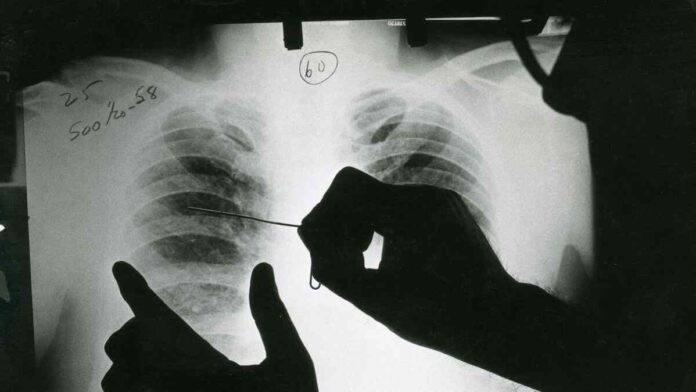
In the underground coal mines of the central Appalachia, the air remains a silent killer. Black lung disease, the coal and silica dust induced scarring of the lungs has re-emerged at rates unseen in a generation. An investigation by the federal government revealed that almost one out of three veteran underground coal miners in eastern Kentucky, southwestern Virginia and West Virginia had black lung disease. More than seventeen hundred miners were killed by it between 2020 and 2023 alone. But, the most powerful anti-black lung legislation written to curb it is almost never implemented.
The rule, finalized in 2024, would have reduced the maximum permissible concentration of respirable silica in coal mines to the standard that was already in place in construction and the many other industries where silica had become the primary de biosoil-born contaminant at the workplace. It also called for engineering controls and better ventilation instead of the respirators that would be an impossible intrusion in a dark dusty working face. Implementation was delayed almost from the beginning. Fund-ing became an obstacle. Then thecurrent administration announced that for the time being it would not try to enforce the new limits. Litigation was filed and rulings obtained to stay the rule; the Mine Safety and Health Administration already has announced it will not try to implement the standards until the legal issues are resolved.
For miners suffering the disease, the wait is individual. Some who spent twenty, thirty years working underground are now gasping for air; many rely on oxygen tanks, gridlocked appointments at doctors’ offices. They have waited years for federal black lung compensation, only to have coal companies dispute them. Appeals go on for three years or more at a time. A Virginia miner retired with first- and second-stage disease”how many people going to have to die before this system will believe there is something really wrong.”
The re-emergence of progressive massive fibrosis (the most advanced form of black lung) is also related to silica. With the extraction of thinner coal seams, larger amounts of rock (containing the silica) are cut, and fine particles of crystalline silica are inhaled and deposited deep within the lungs. Clinics throughout the area report seeing the disease emerging in younger miners as well as boom-time veterans. Health providers characterize the thing as a slow-motion replay of past industrial accidents, except that the speech signals have sounded for quite some time now.
Supporters say the rule is in the regulation books, waiting to be implemented. Previous regulators who drafted the rule note that the scientific argument for stricter silica limits has been in place since the 1970s. Labor groups have urged the agency to implement it and say that another month of delay exposes more miners to deadly levels of dust. Industry groups say that the deadline for compliance in the original rule, as well as its enforcement provisions, were not workable and need to be revised;
In the meantime overall policy context is toward increased coal production. Support for the industry has increased despite evidence that health outcomes are worsening. It doesn’t take a clairvoyant to see the contradictionan administration that hopes to take us back to coalmining years would surely be doing everything it could to advance the most powerful modern means of improving miner health.